Live-Action vs Animation: How to choose the right video style for your story
Originally published in 2022, updated in 2026
A Guide From the Click2View Team
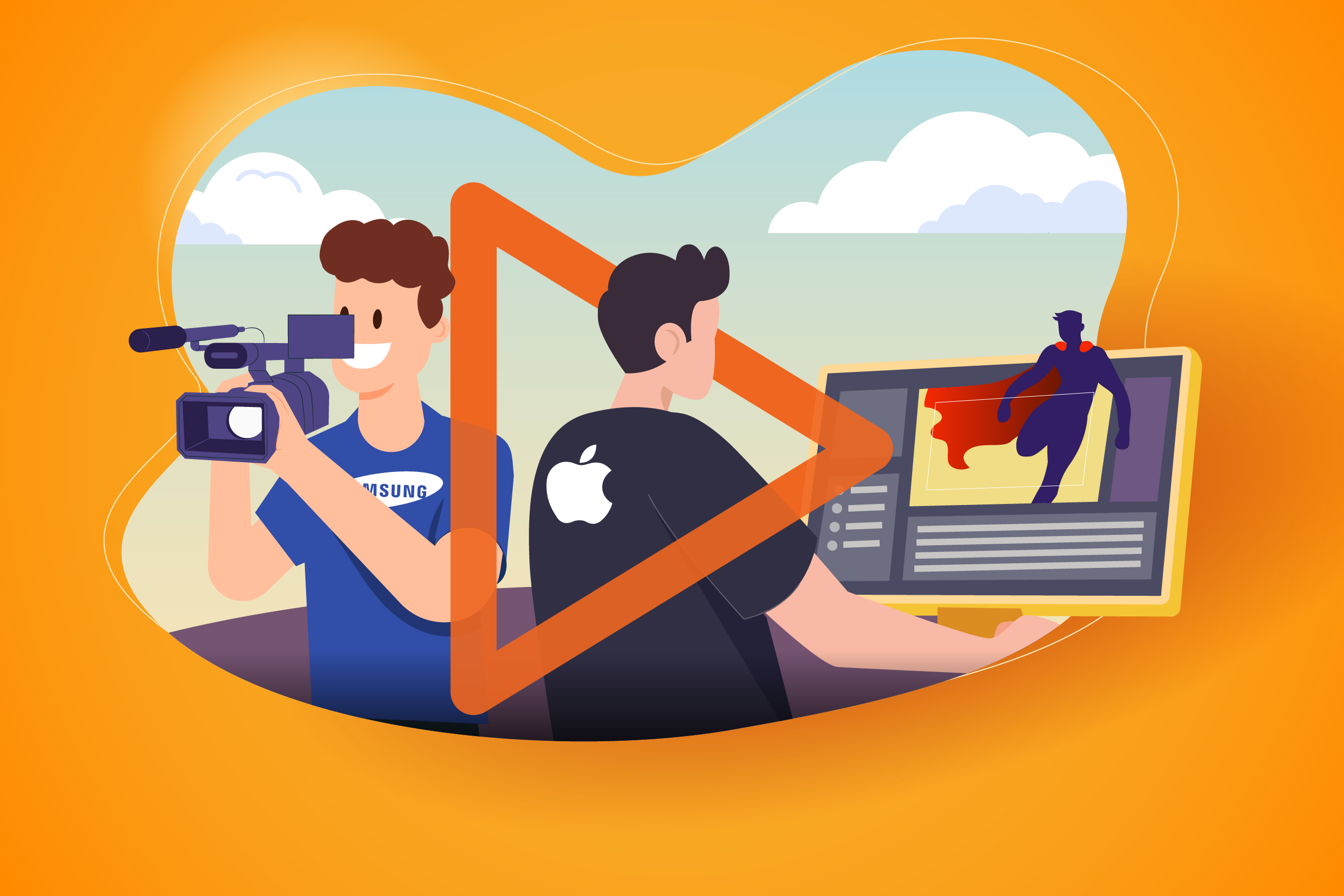
When you’re planning a video, the first creative decision usually comes down to live-action vs animation , or whether a mix of both is the right approach.
It’s a choice that shapes tone, clarity, cost, and how your audience experiences the message.
But it’s not always as straightforward as it looks.
Live-action videos feel human, emotional, and immediate.
Animation is flexible, imaginative, and brilliant for explaining complex ideas.
Both formats are powerful.
Each has their own strengths and limitations.
This guide will break down when to use live-action, when to choose animation, when to blend the two, and how to make the decision based on your message, audience, timeline, and budget.
What The Choice Between Live-Action vs Animation Actually Entails
Live-Action
These are videos created using real people, real environments, real cameras, and real-world footage.
Think:
- Customer testimonials
- Founder or CEO videos
- Real locations
- Lifestyle storytelling
- Product demos
- Documentary-style content
Animation
These videos are created using illustrated, drawn, rendered, or computer-generated elements. This includes:
- 2D animation
- 3D animation
- Motion graphics
- Kinetic typography
- Animated infographics
- Animated UI walkthroughs
- Character animation
Animation isn't just cartoons: it covers everything from elegant motion graphics to data visualisation and Software as a Service (SaaS) product explainers.
Live Action vs Animation Isn’t a Creative Choice; It’s a Strategic One
Many teams treat format as a creative preference:
“Animation feels safer.”
Or “Live-action feels more premium.”
In reality, format choice is a strategic communication decision.
The format you choose signals:
- How confident you are in your message
- How mature your product or brand is
- How much trust you’re asking from the audience
- Whether this is exploratory, educational, or persuasive
For example:
- Early-stage products often lean on animation to explain what something is.
- Established brands use live-action to show who they are.
- Transformation stories often require both.
This is why the right question isn’t “Which format looks better?”
It’s “What does the audience need to believe after watching this?”
4 Scenarios Where Live-Action Works Best
Live-action is the fastest way to make your brand feel human. We’re hardwired to connect with faces, voices, body language, and emotional cues.
Live-action taps directly into that.
1. When you want emotional human connection
People trust faces more than abstract visuals.
Live-action is ideal for:
- Customer testimonials
- Leadership messages
- Employer branding
- Team stories
- Behind-the-scenes content
- Documentary-style brand films
Real people = real emotion. Real emotion = real rapport.
Example: A business owner explaining how a logistics solution changed their operations feels far more authentic when you can see and hear them, not just read animated captions.
2. When you need to show your product in the real world
If your product is physical, experiential, or sensory, live-action wins.
Best for:
- Cars
- Fashion
- Cosmetics
- Food and beverage
- Industrial equipment
- Interior spaces
- Hardware
- Hospitality experiences
Animation can support the story, but live-action carries the “realness.”
3. When speed and spontaneity matter
With modern smartphones and remote-shoot workflows, live-action can be fast and surprisingly efficient.
Examples:
- Short social videos
- Quick interviews
- User-generated content (UGC) style campaigns
- Event coverage
- “Day in the life” content
Live-action captures authentic moments that don’t need post-production complexity.
4. When you want audiences to see your people
Live-action is the best way to build:
- Familiarity
- Trust
- Leadership visibility
- Relatability
- Internal culture
- Employer branding
A well-shot conversation with your founder or a walk-through with a customer success manager beats any animated character when your goal is authenticity.
Live-Action Across the Funnel: Awareness, Consideration, Trust
Live-action plays very differently depending on where the viewer is in the journey.
Top of funnel (awareness)
Best formats:
- Brand films
- Culture videos
- Social-first storytelling
Here, live-action humanises the brand and creates emotional entry points.
Mid funnel (consideration)
Best formats:
- Customer stories
- Problem-solution narratives
- Expert-led explainers
Seeing "someone like me describe a problem" builds credibility faster than diagrams.
Bottom of funnel (decision)
Best formats:
- Testimonials
- Case study interviews
- Founder reassurance videos
At this stage, live-action reduces risk. Buyers want proof, not polish.
This is why live-action is so powerful for B2B; buying decisions are emotional and rational.
3 Drawbacks of Live-Action
Live-action is powerful, but it’s not always the simplest choice.
1. Harder to edit later
If you miss a shot, you can’t “re-animate” it. Reshoots mean rehiring crew, securing locations, and pulling people back in.
2. More expensive to produce at scale
Cameras may be cheap, but:
- Lighting
- Sound
- Production crew
- Locations
- Wardrobe
- Talent
…all add up.
3. Limited by reality
You can’t film a spaceship or a data visualization floating in the room (not affordably at least).
Animation handles the impossible with ease.
Where Live-Action Often Fails (And Why)
Live-action underperforms when:
- Scripts are over-polished and under-human
- Speakers sound like they’re reading slides
- Visuals don’t add meaning beyond “talking head”
A common mistake is assuming that filming real people automatically creates authenticity.
It doesn’t.
Authenticity comes from:
- Clear ideas
- Honest language
- Strong structure
- Editing discipline
A poorly directed live-action video can feel slower, flatter, and less clear than a well-designed animation.
4 Scenarios Where Animation Works Best
Animation gives you complete control over what appears on screen: every character, object, colour, transition, icon, and movement. When you need clarity, precision, or imagination, animation shines.
1. When your message is complex or abstract
Perfect for:
- Software as a Service (SaaS) explainers
- Cloud solutions
- Cybersecurity
- Finance concepts
- Product UI walkthroughs
- Data visualization
- Intangible services
Animation lets you turn complexity into clarity.
Shapes, icons, lines, and movement transform “boring but important” into “effortless to understand.”
Example: An animated walkthrough of a cloud management dashboard communicates features better than any filmed screen could.
2. When you need full creative freedom
Animation is only limited by imagination.
You can:
- Fly through data
- Show a product in exploded view
- Create characters
- Travel through time
- Build worlds
- Explain processes step-by-step
- Illustrate things impossible to film
This is where animation becomes cost-effective: filming a spaceship is expensive, animating one is not.
3. When you want consistency across versions
Animation is easy to update:
- New text
- New language versions
- New product features
- New brand colours
- Shorter/longer cuts
Live-action often needs reshoots. Animation can be adjusted without rebuilding an entire production.
4. When the budget needs to be stable
Animation often requires:
- Fewer people
- Fewer dependencies
- No location fees
- No travel
- No on-screen talent
And while high-end animation can be pricey, simple animation (e.g., motion graphics, kinetic typography) gives you professional polish at a lower cost.
Animation as a Thinking Tool (Not Just a Visual One)
Animation doesn’t just show ideas; it helps teams think more clearly about them.
Because animation requires you to define:
- What appears on screen
- In what order
- For how long
- With what emphasis
…it forces clarity.
This is why animation is often used for:
- Strategy communication
- Internal alignment
- Training and onboarding
- Investor explanations
If you can’t animate it simply, you probably can’t explain it clearly.
3 Drawbacks of Animation
Animation is powerful, but not effortless.
1. More planning, not less
Animation requires specific planning.
Every detail must be designed:
- Characters
- Colour palettes
- Textures
- Movement
- Backgrounds
- Transitions
Animators often talk about the “blank canvas effect,” which is where unlimited visual options actually make decisions harder unless the creative direction is nailed down early.
2. Longer production timelines
Animation is built, not captured.
Even simple scenes take time to design and animate.
3. Can feel impersonal
If your story depends on emotional nuance, animated characters may feel distant compared to real faces.
Where Animation Can Go Wrong
Animation fails when:
- Everything moves, but nothing matters
- Visuals decorate instead of explain
- Style overtakes substance
- Scripts are weak and animation is used to “hide it”
Animation amplifies whatever it touches: clarity or confusion.
A beautifully animated unclear idea is still unclear.
Hybrid Videos: No More Choosing Between Live-Action vs Animation?
Absolutely not. Hybrid video isn’t a compromise, it’s a response to how modern audiences process information.
Why This Is Now the Default Choice
People want:
- Faces to trust
- Visuals to understand
- Structure to follow
- Pace to hold attention
Hybrid formats allow:
- Live interviews with animated emphasis
- Real stories with abstract overlays
- UI demonstrations layered onto human narration
This is why hybrid is now common in:
- Digital transformation stories
- SaaS launch videos
- Thought leadership
- Explainer-led brand films
In many modern productions, pure live-action or pure animation is the exception, not the rule.
Live-Action Vs Animation: Longevity, Reuse, and Content Shelf Life
Format choice also affects how long your video stays useful.
Live-action longevity
- Strong for moment-in-time messaging
- Dates faster (people leave, brands evolve)
- Harder to update
Animation longevity
- Easier to refresh
- Language-agnostic
- Modular
This matters if your video is meant to:
- Live on your website long-term
- Support onboarding
- Be reused across regions
Many teams choose animation not because it’s cheaper, but because it ages better.
How to Choose Between Live-Action vs Animation: A Simple Framework
Here’s a clean decision matrix your team can use.
1. What’s the message?
2. What’s your product?
3. What’s your budget & timeline?
4. Where will this video live?
Live-action works best for:
- LinkedIn leadership content
- Employer branding
- Culture videos
- Testimonials
- Behind-the-scenes
Animation works best for:
- Product explainers
- Website hero videos
- Onboarding
- Training
- Software as a Service (SaaS) demos
- Internal presentations
Hybrid works best for:
- Brand films
- Launches
- Conceptual storytelling
- Digital transformation narratives
5 Common Mistakes Teams Make When Choosing Between Live-Action vs Animation
- Choosing based on personal taste
- Defaulting to animation, because it feels “safer”
- Assuming live-action guarantees engagement
- Ignoring where the video will live
- Treating format as a final decision, instead of a tool
The strongest videos start with message, audience, and intent; not aesthetics.
Live-Action vs Animation: Modern Considerations
Here’s what’s reshaping video strategy:
AI-assisted workflows
AI now supports:
- Storyboarding
- Animatics
- Motion exploration
- Voiceovers
- Visual concepts
- Captioning
- Basic animation assistance
Remote production
Live-action can be filmed anywhere with:
- Remote directors
- Smartphone capture
- Cloud review tools
- Virtual studios
2D vs 3D decision-making
2D is great for:
- Clarity
- Training
- Fast production
3D is better for:
- Product visualisation
- Environments
- Technical storytelling
Motion graphics for everything
Most corporate videos today use some form of:
- Animated text
- UI overlays
- Transitions
- Highlight markers
- Diagram animations
These elevate both live-action and animation formats.
A Simple Rule of Thumb to Decide Between Live-Action vs Animation
If people are the point → show people
If ideas are the point → animate ideas
If change is the point → combine both
Conclusion
Live-action creates emotional connection.
Animation creates clarity.
Hybrid creates impact.
The question isn’t “Which is better?” It’s “Which format best serves the story we need to tell?”
If your message is human, film humans. (link to video production services page)
If your message is abstract, animate it. (link to C2V studios/animation services page)
If your message needs both, combine them.
This is how you choose a video format that elevates your message.
FAQs
Is animation cheaper than live-action?
Sometimes, but not always.
Simple motion graphics are inexpensive. Complex character animation or 3D can be more costly than a live shoot.
Can I mix live-action and animation?
Yes, hybrid videos often deliver the strongest results.
Which is better for Software as a Service (SaaS) products?
Animation (especially motion graphics and UI walkthroughs) is generally more effective for digital products.
Which is better for emotional storytelling?
Live-action, especially when people, leadership, or customers are central to the narrative.
What’s fastest to produce?
Simple live-action or simple animation.
Complex work in either format takes time.
What should I pick if I’m not sure?
Start with your message, not the medium.
Let the story dictate the format, not the other way around.