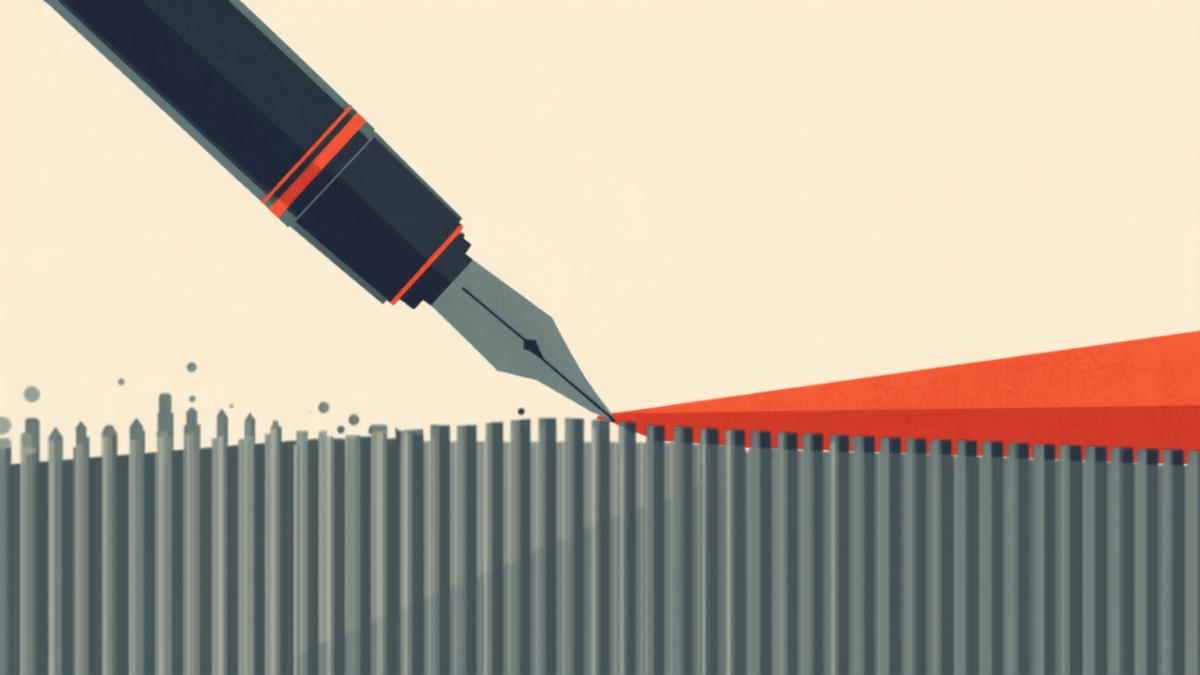
Why public sector animation shouldn't sound like a press release

Open a government explainer video and you can usually guess the next ten seconds, a rotating globe, some interlocking gears, a narrator reading in the flat tone reserved for terms and conditions. Somewhere in the script sits a line lifted straight from a press release, never translated into something a person would actually say out loud.
Much of public sector animation still relies on this familiar toolkit. Yet animation is one of the few formats capable of making a confusing policy click in 60 seconds. When agencies fall back on tired conventions, they risk losing the very thing the video is supposed to create, understanding.
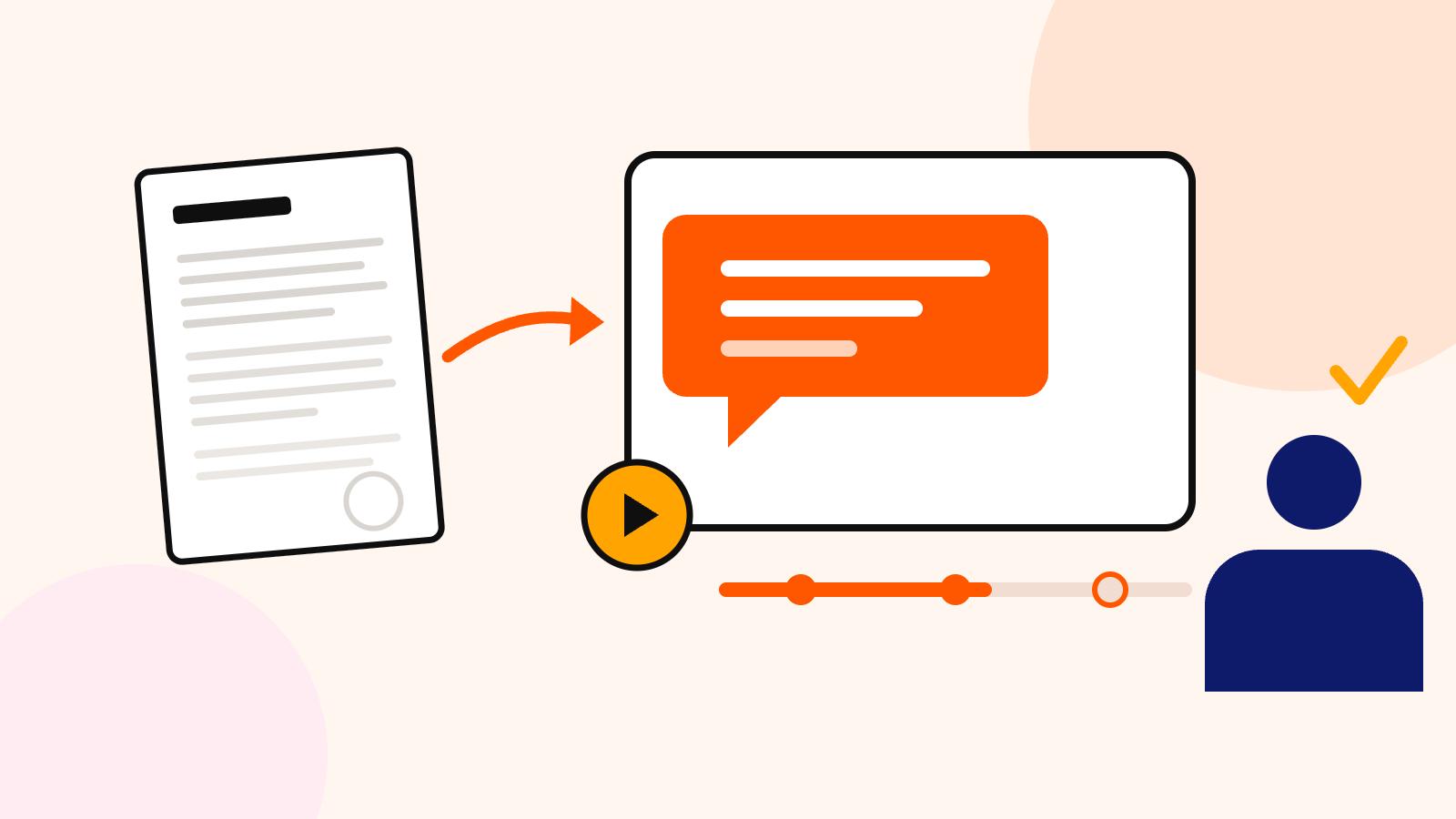
Clear language helps build trust
Trust in government isn't high to start with. The OECD's 2026 Trust Survey found 51% of Australians reporting high or moderately high trust in their federal government in 2025, up from 38% in 2021 and ahead of the OECD average of 40%. A record for Australia, and still a coin flip. Edelman's 2026 Trust Barometer puts global trust in government at 53%, behind both business and employers. Every piece of communication either builds that number or chips away at it.
The bigger problem is comprehension. The OECD's Survey of Adult Skills found 30% of Singaporean adults read at Level 1 or below, against an OECD average of 26%. At that level you can handle a short text or an organised list if the information is clearly signposted. A three-page policy FAQ is out. Literacy also drops sharply after 35, and Singaporeans aged 55 to 65 rank 27th of the 31 countries surveyed. You won't see that ranking in a government press release, and it describes the exact group most retirement, housing and healthcare schemes are written for. Explain a policy in the register of the legislation and a good chunk of the audience is gone before the point arrives.
What good public sector animation looks like
Southeast Asian governments have been doing this longer than most people realise. Thailand's first ever animated film, commissioned by the government in 1945, was a one-minute safety film telling citizens to wear hats and farmers to wear boots. The instinct hasn't changed since. Only the toolkit has.
Singapore's CPF Board runs a CPF Explained series, breaking down retirement sums and how CPF accounts work for housing, healthcare and retirement. One concept per video, released steadily throughout the year.
Malaysia's Ministry of Health made the same bet during COVID-19, teaming up with local studio Monsta, the makers of BoBoiBoy, to put the country's own Director-General of Health, Dr Noor Hisham Abdullah, into an animated campaign teaching the public its CAPP hygiene protocol. The Road Transport Department made the same call again in August 2026, partnering with Monsta on a new road safety series built around a character called FIFI, aimed at children and, through them, their parents. Government animation works here for the same reason it works anywhere. It borrows a format the audience already likes. Nobody has to build trust from a cold start.
Vietnam went further. In February 2020 the National Institute of Occupational and Environmental Health, which sits under the Ministry of Health, took the V-pop hit Ghen, had its composer Khắc Hưng rewrite the lyrics, and released the result as an animated video telling citizens to “push back the virus Corona, Corona”. Wash your hands, don't touch your face, stay out of crowds. The chorus runs about twenty seconds, which is exactly how long you're meant to spend washing your hands. Within weeks the original had 9.4 million views on YouTube, dancer Quang Đăng had turned it into a handwashing challenge on TikTok, UNICEF was sharing it, and John Oliver played it on Last Week Tonight. A ministry that ran the same message as a press release would have reached the people who already read ministry press releases.
Anti-corruption bodies have a version of this problem everywhere. In Australia, NSW's Independent Commission Against Corruption used a short animated explainer to correct what people get wrong about it. Many assume it works like a court and can jail people. The video states the facts flatly, corruption findings and criminal sentencing are separate matters, and leaves it there. Indonesia's KPK took the other road. Its Sahabat Pemberani series, produced with USAID and distributed free through the commission's own YouTube channel, targets primary schoolers aged seven to twelve and works nine values into half-hour stories, among them honesty, fairness and discipline. KPK's stated aim was to do it in a way that entertains and doesn't lecture. One agency fixes misconceptions in adults. The other tries to stop them forming. Both picked animation because it lets you say something plainly without sounding like you're defending yourself.
Match the format to the confusion
A policy explainer and a public safety warning need different tools. Good government animation starts by working out which kind of confusion you're up against before anyone writes a script.
“What does this actually give me?”
Animate the entitlement. Western Australia's Wageline series uses character-led walkthroughs to explain long service leave and other conditions otherwise buried in legislation. The animation does the job the fine print could never do.
“Who are you and what can you do to me?”
Correct the record without defending yourself. ICAC and KPK both work because they assume the audience can handle the facts once someone lays them out.
The topic is political but the message isn't
Keep the script deliberately neutral. The NSW Electoral Commission's “Stop and Consider” campaign, adapted from the Australian Electoral Commission's national version, is a behavioural checklist. Is it from a reliable source, is it current, and if you're not sure, don't share it. Nothing about who to trust. Strip the partisanship out and the message survives contact with a divided audience.
The audience speaks four languages
Build once, swap the voiceover. Victoria's Department of Education made a three-part series for international students and translated it into Simplified Chinese, Vietnamese and Hindi without redrawing a frame. Live action would have meant three shoots. Animation meant three voice tracks.
Plan for the approval chain
Public sector animation runs into an obstacle most industries never meet, the approval chain. Legal checks the script for anything that reads as a commitment. Comms checks it for tone. Depending on the topic, a minister's office checks it for anything that reads as political. By the time a script clears every desk, the instinct is to hedge every sentence until nobody could misread it, which also guarantees a complex video nobody understands.
The agencies doing the strongest work push back early. They pick one goal, a behaviour to shift or a misconception to correct, and maintain that scope through every review round. They don't let the brief balloon to cover every stakeholder's pet concern. A 60-second video that does one job beats a three-minute video trying to pre-empt every objection.
How to start with public sector animation
Find the one place where a policy, scheme or process is genuinely misunderstood. Start there. Draft the script the way you'd explain it to someone at a community meeting. Give legal and comms that version to edit. Keep the first cut under 60 seconds. Resist folding in every caveat a stakeholder asks for. An animated explainer video built around that one point of confusion does more than a fact sheet ever will, and the videos that actually shift behaviour or fix a misconception are the ones that stayed narrow enough to say one thing clearly.
Policies are allowed to be complicated. Explanations that sound like nobody wanted to write them are what people hold against you. Public sector animation, done plainly and without the spin, is one of the few formats built to fix that.
Click2View provides government animation services and motion graphics for agencies and statutory boards across Asia, built to explain policy clearly. If your next explainer has to be understood the first time, talk to us.